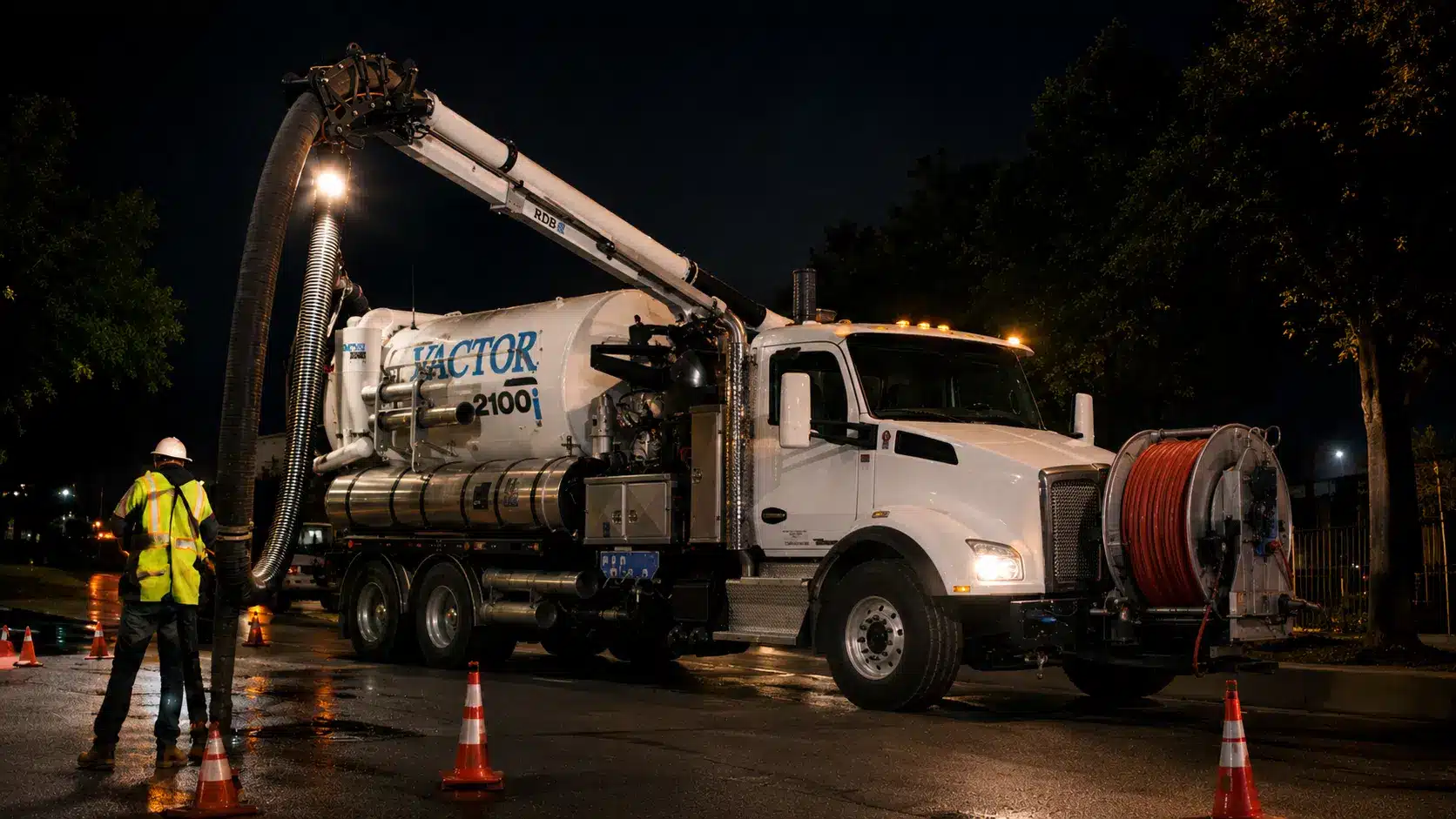
See What Your System Is Hiding
CCTV sewer inspection gives municipalities, utility districts, engineers, and facility operators recorded proof of what is happening inside underground lines before defects become failures.


CCTV sewer inspection gives municipalities, utility districts, engineers, and facility operators recorded proof of what is happening inside underground lines before defects become failures.
 RecordedDefectI/I & RootServing Texas
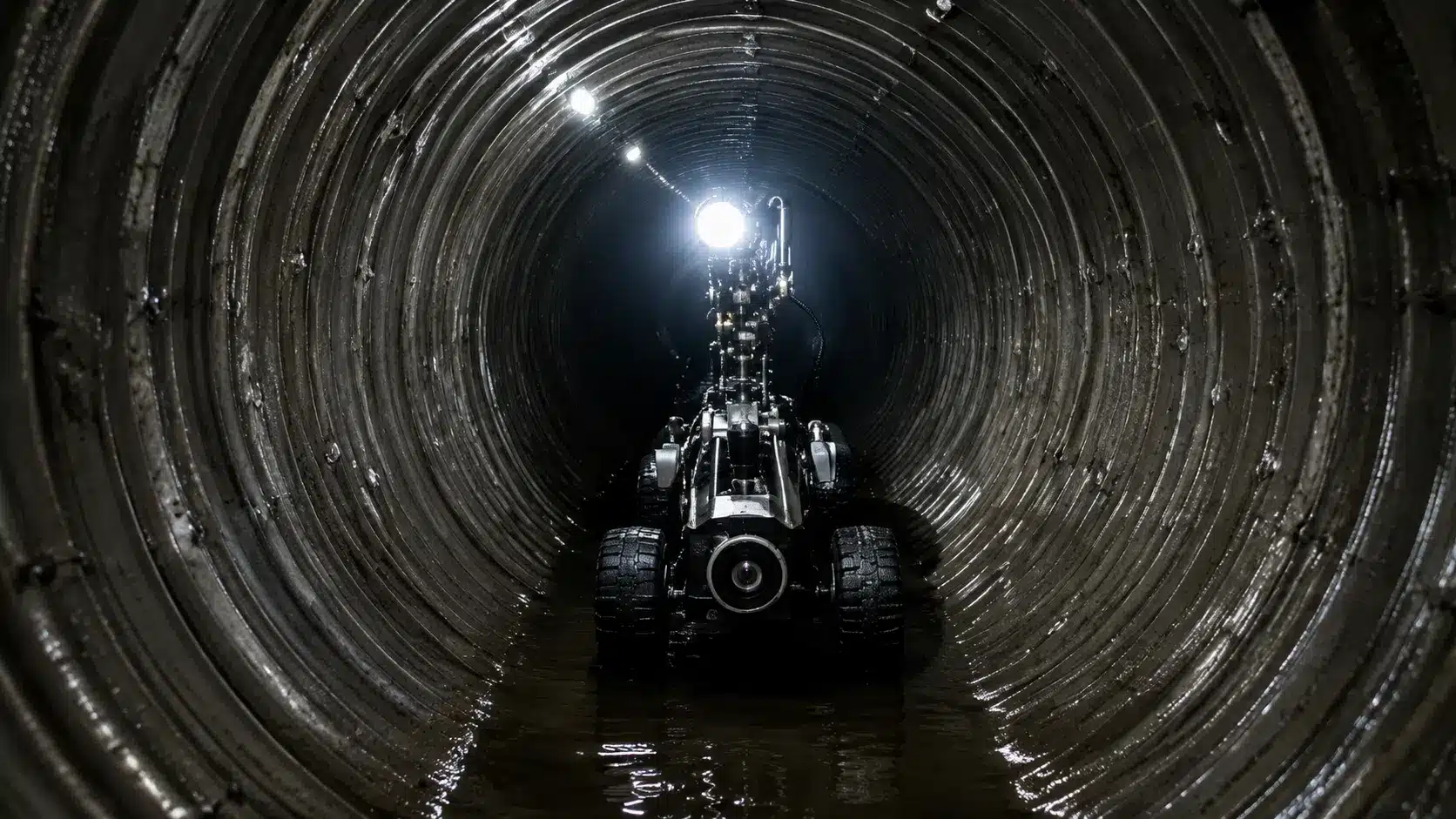
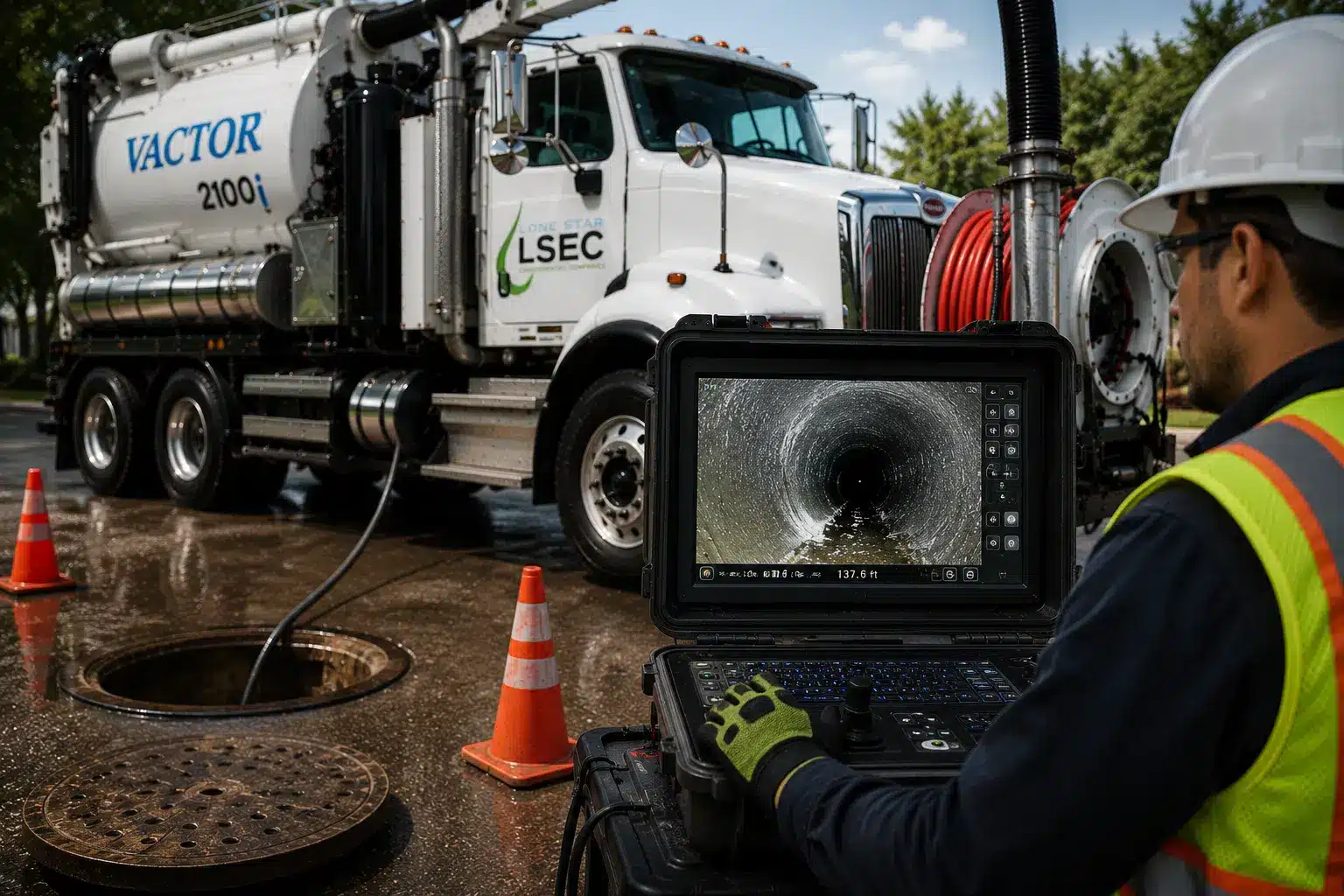
A sewer line can look fine on the surface while deteriorating underground. CCTV sewer inspection puts a camera directly into the line, giving operators and engineers a clear view of pipe conditions that would otherwise stay buried until something failed.
LSEC captures recorded video, documents pipe condition, and identifies the exact location of defects so clients can move from guesswork to proof.
Small defects do not stay small forever. Cracks widen, joints separate, roots spread, sediment accumulates, and infiltration adds unwanted flow to systems that were never designed to carry it. CCTV inspection catches these conditions early, while intervention is still planned instead of emergency-driven.
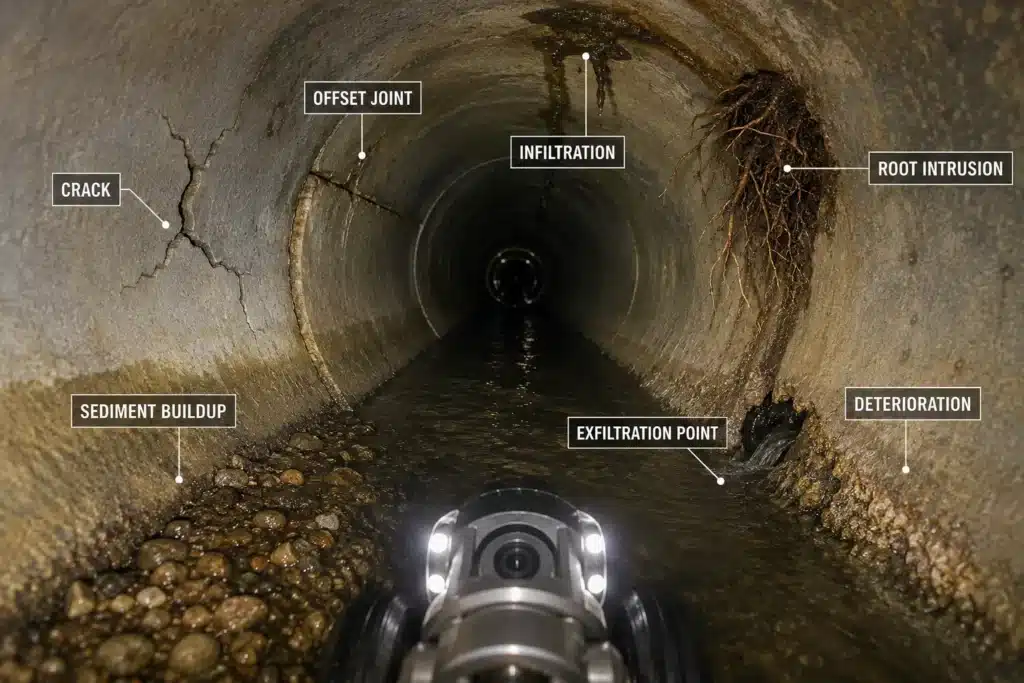
Identify cracks, offset joints, root intrusion, sediment buildup, deterioration, infiltration, and exfiltration points.
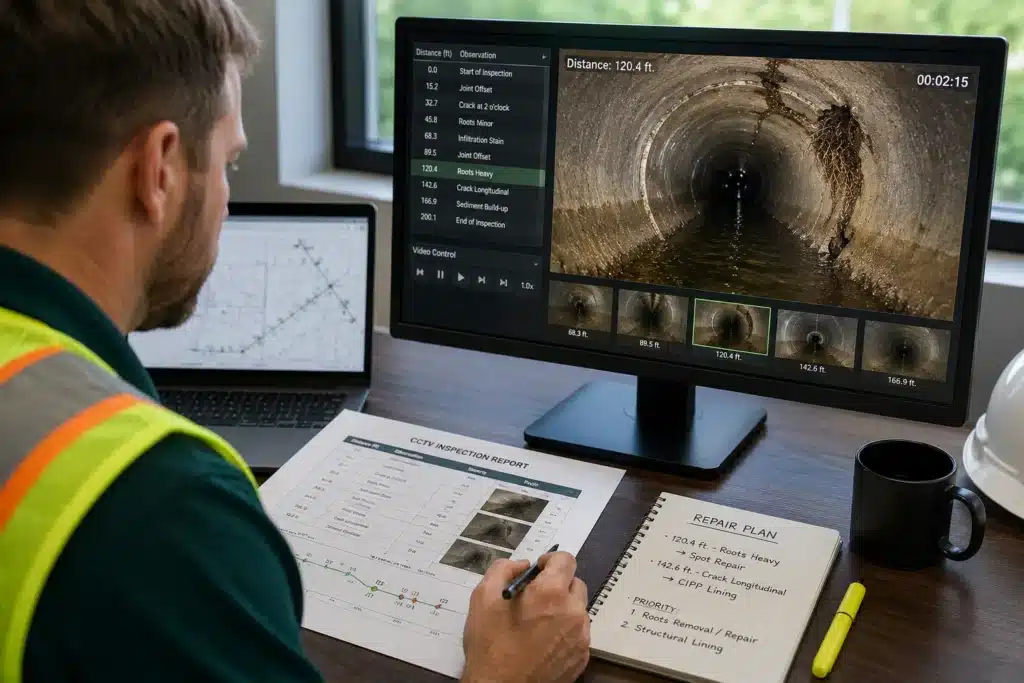
Give engineers and public works teams footage-backed evidence for repair prioritization and rehabilitation budgets.
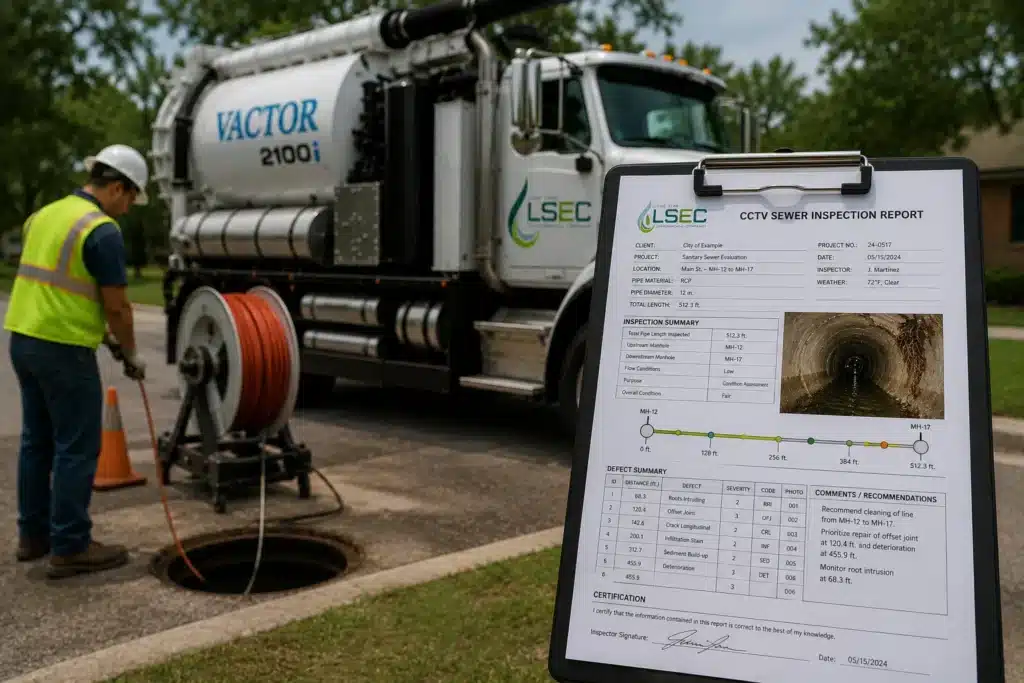
Create a documented field record that helps municipalities and facilities prepare for inspections, audits, and reviews.
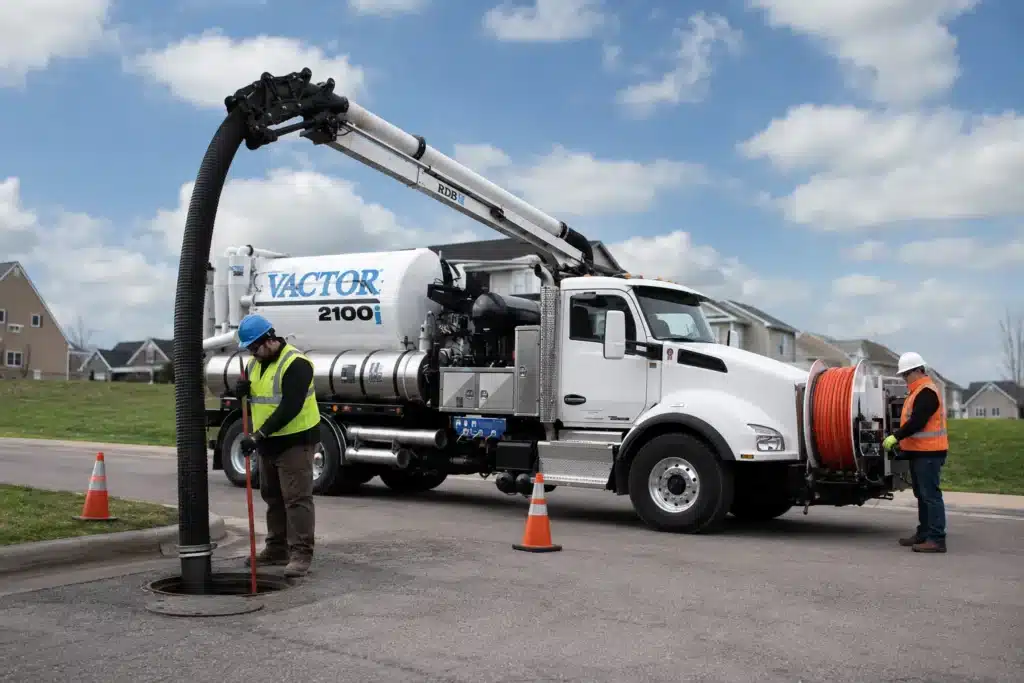
Build a permanent video record that supports long-term asset management and gives future inspections a clear baseline.
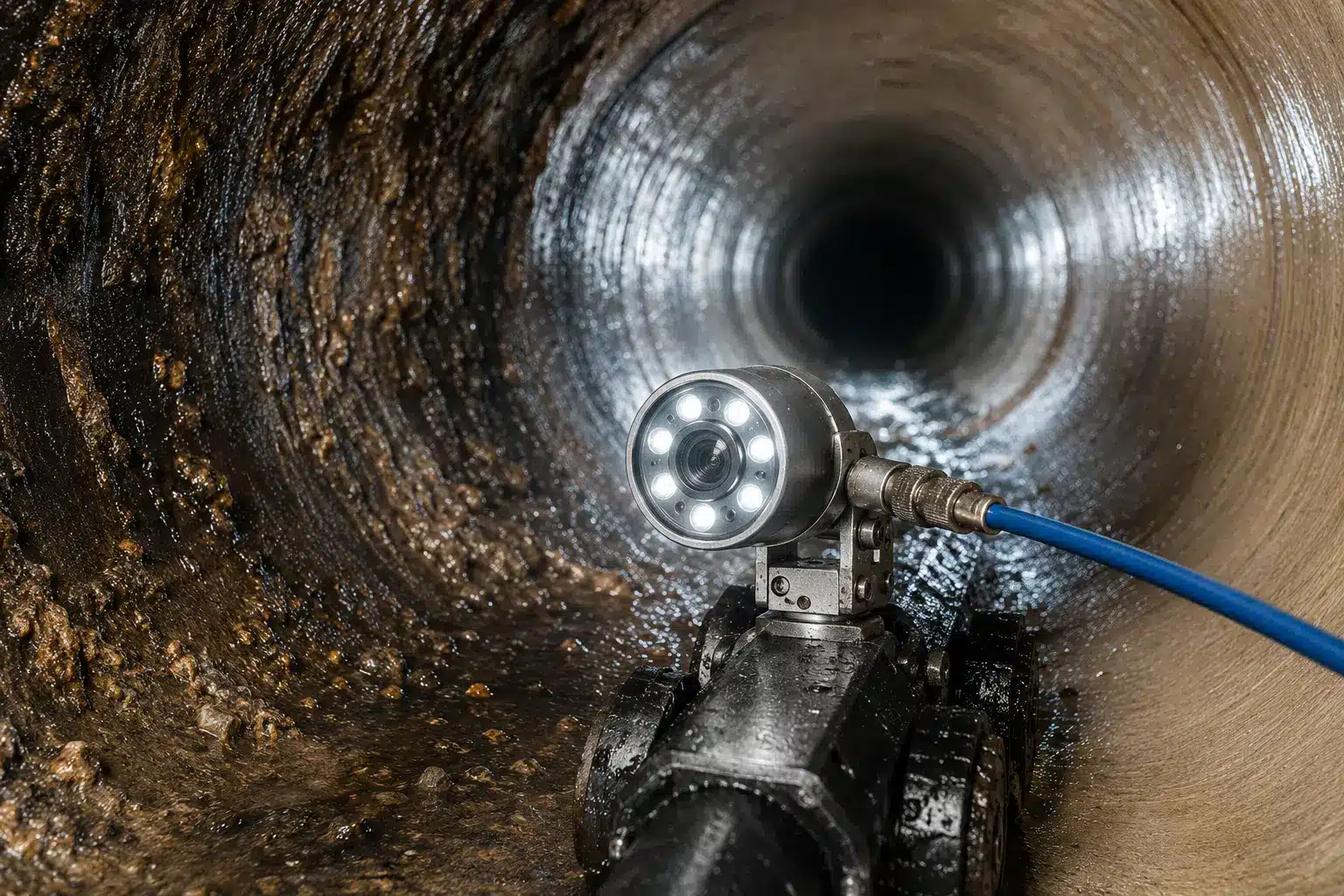
Every CCTV inspection starts with a plan built around the line itself, including access points, pipe diameter, and inspection goals. The camera runs the full length of the line while the operator records video, tracks distance, marks defects, and documents conditions down to the foot.
LSEC pairs the video record with written notes so clients receive a complete inspection report they can act on the same day it arrives.
A documented inspection does more than confirm a suspicion. It gives decision makers the evidence they need to prioritize repairs, secure funding, document compliance, and build capital plans around actual pipe condition.
Recorded footage gives decision makers a clear view of pipe condition instead of relying on assumptions.
Structural defects can be addressed before they become overflows, backups, collapses, or emergency repairs.
Inspection footage exposes where unwanted stormwater or groundwater is entering the sanitary system.
Each inspection creates a baseline that future inspections can measure against over time.
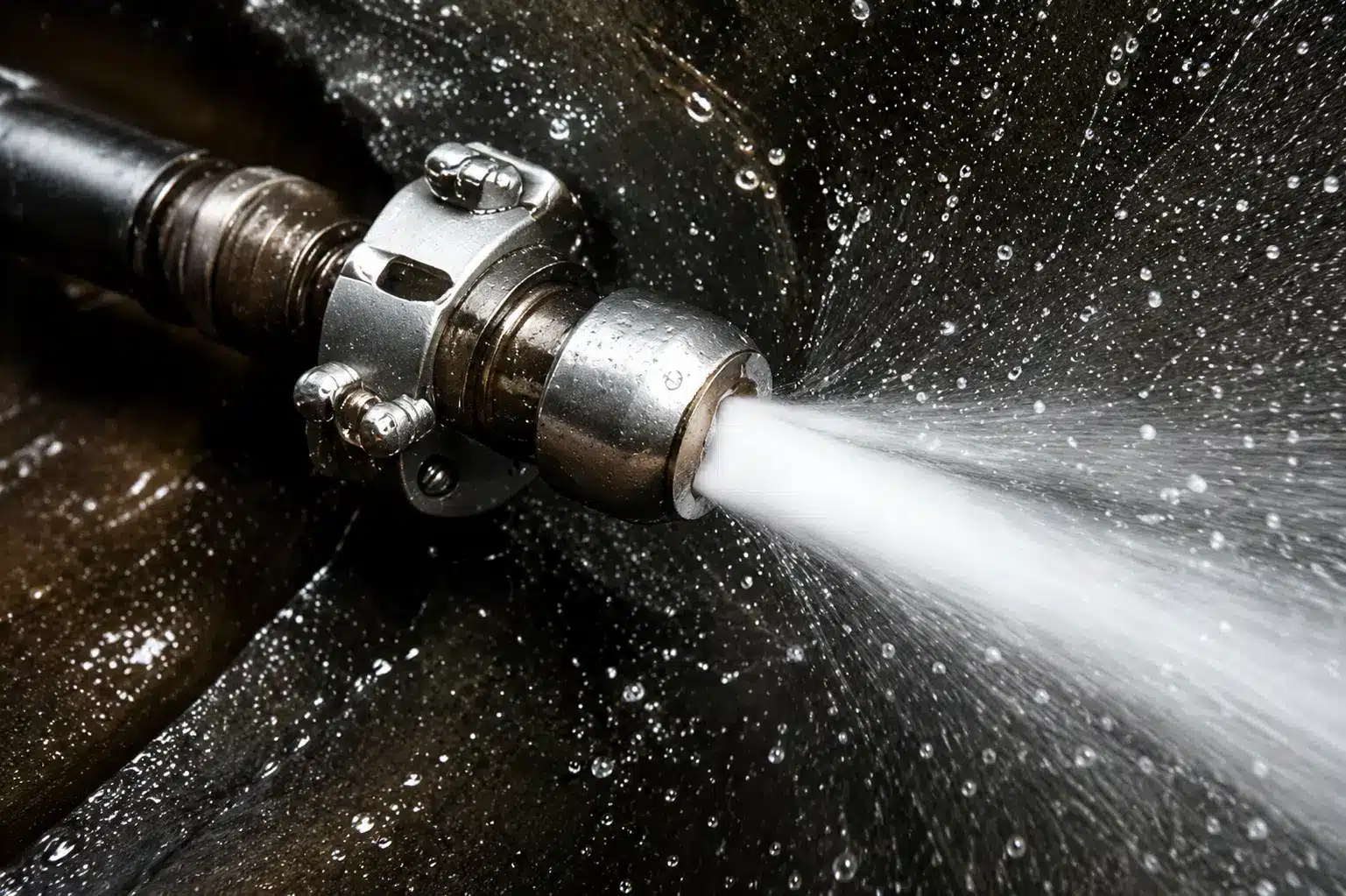
From major metros to rural communities, LSEC delivers the hydro jetting and line cleaning services Texas infrastructure depends on.
CCTV inspection can identify cracks, offset joints, root intrusion, sediment buildup, structural deterioration, infiltration points, exfiltration points, obstructions, and other defects inside the line.
No. CCTV inspection allows LSEC to evaluate pipe condition from inside the line without removing pipe from the ground.
Yes. LSEC provides recorded video along with written notes and defect locations so the inspection can be used for repair planning, compliance documentation, and asset management.
Yes. Camera footage can help identify where stormwater or groundwater is entering a sanitary sewer system, which helps sharpen capacity planning and reduce unnecessary flow to treatment facilities.
CCTV inspection is valuable before accepting a new line, when evaluating aging infrastructure, after recurring backups or complaints, and before planning rehabilitation or replacement work.
A pipe that has never been inspected has a condition nobody can confirm. Put a camera in the line and get the answer on screen.
We are committed to protecting our people, our clients, and the communities we serve through a culture of safety, training, and accountability.
(281) 123-4567
info@lsectx.com
Houston, Texas
© 2026 Lone Star Environmental Companies